


The Most Common Warning Signs of Bad Brakes
Parts inevitably fail with use and time. It’s extremely important for drivers to know what the warning signs of brake failure are and what to do when they are detected. Not recognizing the signs in time could result in a costly accident. Check out the most common signs of brake system failure, and learn how to detect them before they cause more damage.
Harsh Noise, Vibrations, or Smell
Grinding, hard rubbing, screeching, squealing, and grating sounds are signs that your brake shoes and pads require replacement. If they are not replaced before the pad in the contact area is gone, the brake system could cause damage to other car parts. Repairing those parts is far more expensive than a set of replacement brake pads, so don’t procrastinate when you hear these sounds from your wheels or feel sharp vibrations when you brake. Get these issues taken care of at the first sign of trouble.
The most common vibrations from a deteriorating brake system travel up the steering column and the brake pedal. If these vibrations are ignored, the rotors of your vehicle could be severely damaged. A set of four rotors plus labor costs averages around $2,000. If you detect strong metallic or rubber smells, get your vehicle to a shop immediately. It’s wise to call a tow truck if you smell these things, as they most often come from unsafe and heavily sparking or overheating brake systems.
Leaks and Warnings
Keep an eye out for your brake warning lights. There should be one for the brakes and one for the brake fluid. If either of these lights is activated, get to a shop as soon as you can. If your brake pedal feels oddly soft and your normal pressure isn’t as effective as it usually is, you may be looking at low brake fluid levels. Brake fluid freezes at 10 below zero. It boils at different temperatures based on DOT ratings, with boiling points ranging from 205 to 401 degrees, on average.
It’s also possible for soft pedals to be a sign of master cylinder degradation. If master cylinder failure becomes total, your brakes will fail completely. Automatic brakes tend to stop at around 1.5 inches from the floorboard, while manual brakes press down to around 3 inches from it.
Strange Vehicular Reactions to Braking
If your vehicle is dragging unevenly or pulling to the left or right when you brake, you may have a brake hose or caliper problem in one or more wheel areas. Uneven dragging is often caused by calipers that are squeezing more tightly than they should. Shop personnel can easily fix these issues, but ignoring them can be disastrous. If lines are allowed to deteriorate, brake fluid can no longer move properly through the system, a situation that will cause complete brake failure. Don’t mistake bouncing during braking for a brake issue. This is most likely a shock absorber issue. Â
Keep an Eye On Pad Thickness and Condition
Take a look behind your wheel spokes. You should be able to see your brake pad there, where it pushes against the rotor. If the pad is at least a quarter of an inch thick, you can wait to replace it, but if it’s thinner than that, the time has come to get the job done. If you reside in a very cold or humid area, keep an eye out for rusting, splitting, or cracking in your rotors, brake pads, and wheels.
Thin layers of rust that sometimes form on brake pads can be harmless, but if the rust doesn’t wear off with regular use, it’s probably time to have your brakes serviced by a certified dealer. If you notice heavy discoloration in your brake pads or on the parts surrounding them, be sure to get them checked as soon as possible.
Methods to Avoid Brake Wear
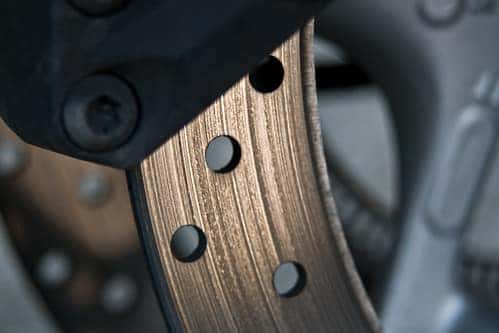
Image via Flickr by voidstern
If you live or often travel through areas where extreme weather conditions are common, make sure you take it easy on your brake system. Hitting the brakes too hard can cause overheating, degrading all the parts near the contact area. Whenever possible, take routes that contain the lowest available instances of stop-and-go driving. This kind of driving wears down brake systems more quickly and more severely than any operation except heavy off-roading and rock crawling.
Make sure your brake pads are made of the right materials and up to specifications, as listed in your user’s manual. Poorly-tooled or improperly fitted brake pads can cause severe breakdowns that set owners back thousands of dollars.
Inspect and Maintain your Lines and Rotors
Make sure you check your brake fluid levels before taking a trip. If the fluid is low, top it off and bleed the brake lines to get rid of any air bubbles. This is a two-person job, with one pumping the brakes and another watching over the bleeder valve, making sure to shut the valve when fluid appears. If you see deep grooves or scoring marks on your rotors, get them checked as quickly as you can. If they wear down too badly, they could break, causing loss of driver control and likely further damage to other parts of your vehicle.
Consider Certified Service
It will be tempting to go with a cheap, local non-dealer shop to get your brake work done, but work from random shops with varied standards is often unreliable. Your dealer’s service department is certified and capable of carrying out top-quality work on your vehicle. We at United Chevrolet Buick GMC know how important your vehicle is to you, so we’ll take care of it as attentively as if it were our own, with the professional skill that can only be garnered from decades of training and experience.
Responsible brake system inspection, care, and maintenance are vital to vehicle occupant safety. Find out more about what you can do to properly maintain and care for your brake systems at United Chevrolet Buick GMC. Our expert brake service center personnel will gladly guide you through their shop’s tips and methods so you can stay safe on the open road.
0 comment(s) so far on The Most Common Warning Signs of Bad Brakes